
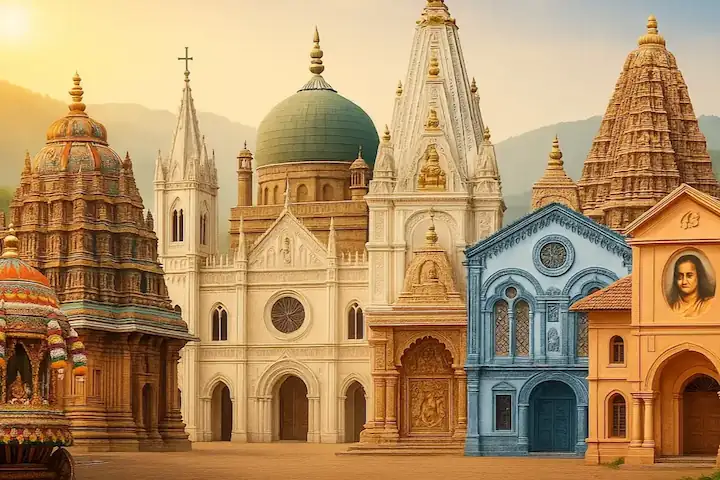
Kerala pilgrimage tourism introduces you to a deeply spiritual world where sacred temples, ancient churches, historic mosques, synagogues, ashrams, and holy sites reflect the profound religious harmony of “God’s Own Country.”
Kerala is among India’s unique destinations where multiple faiths coexist peacefully.
The state’s pilgrimage circuit attracts travellers seeking spiritual enrichment, cultural immersion, and serene experiences grounded in centuries of devotion.
Table of Contents
Kerala Pilgrimage Attractions
Kerala’s spiritual landscape is shaped by centuries-old temples, historic churches, revered mosques, and sacred shrines that continue to inspire millions of devotees every year.
Kerala pilgrimage attractions reveal how diverse faiths have contributed to the state’s spiritual identity.
The region’s geography enables travellers to visit multiple pilgrimage centres in a single journey, offering a fulfilling blend of devotion and cultural insight.
The state is home to some of the most powerful Hindu temples in South India.
The Sree Padmanabhaswamy Temple in Thiruvananthapuram, dedicated to Lord Vishnu, is globally renowned for its Dravidian architecture and sacred rituals.
The temple’s intricate gopuram, daily poojas, and spiritual ambiance make it a central part of Kerala pilgrimage tourism.
Another significant shrine is the Guruvayur Sri Krishna Temple in Thrissur, known as the “Dwarka of the South.”
Devotees visit Guruvayur to offer prayers and witness age-old temple rituals, classical music, elephant sanctuaries, and cultural traditions.
The Sabarimala Ayyappa Temple, nestled deep within the Western Ghats, is another iconic pilgrimage destination visited by millions during the Mandala season.
Devotees undergo 41 days of vratham (austerity) before climbing the sacred 18 steps to worship Lord Ayyappa. This journey symbolises purity, discipline, and spiritual transformation.
Alongside Hindu temples, Kerala is home to some of India’s oldest Christian pilgrimage centres.
The Malayattoor St. Thomas Church, located on a hilltop in the Ernakulam district, is believed to be one of the places visited by St. Thomas the Apostle in AD 52.
Thousands climb the hill during Holy Week, offering candles and prayers in a deeply emotional atmosphere.
The Basilica of Our Lady of Ransom in Vallarpadam and the St. George Forane Church in Edappally (Cochin) attract devotees from across the world seeking healing, blessings, and miraculous interventions.
Kerala also stands as an important destination for Muslim pilgrims.
The Beemapally Dargah in Thiruvananthapuram is dedicated to Beema Beevi, a saint believed to possess miraculous powers.
The annual Urs festival attracts devotees from different faiths, symbolising Kerala’s religious unity.
The Ponnani Juma Masjid, one of the oldest mosques in Kerala, remains a centre of Islamic scholarship and spiritual heritage.
The state also hosts the historic Cheraman Juma Mosque, believed to be the first mosque in India, built in AD 629.
Jewish heritage also marks Kerala’s pilgrimage identity.
The Jewish/Paradesi Synagogue in Kochi (Cochin) is one of the oldest synagogues in the Commonwealth and stands as a symbol of Kerala’s role in global trade and cultural exchange.
Visitors can explore Torah scrolls, antique lamps, and traditional Jewish architecture that reflect Kerala’s multicultural roots.
Kerala’s ashrams and spiritual centres attract thousands seeking meditation, peace, and inner transformation.
The Amritapuri Ashram near Kollam, home to Mata Amritanandamayi Devi (Amma), welcomes seekers from around the world for spiritual teachings, meditation programmes, and humanitarian activities.
Similarly, the Ramakrishna Math in Kozhikode and the Sivananda Ashram in Neyyar Dam offer courses in yoga, spirituality, and holistic living.
When exploring Kerala pilgrimage tourism, each attraction becomes a gateway to timeless devotion, sacred stories, divine rituals, and a deeper understanding of Kerala’s spiritual heritage.
Kerala Sacred Experiences
Immersing yourself in Kerala’s sacred experiences allows you to witness rituals, traditions, and spiritual practices that have been preserved across generations.
These experiences go beyond sightseeing, offering moments of reflection, peace, and emotional connection.
One of the most deeply moving experiences is attending a temple morning pooja.
The sound of conch shells, temple bells, lamps flickering in the soft morning light, and the fragrance of incense create an atmosphere that touches the heart.
Temples like Vadakkunnathan in Thrissur, Chottanikkara in Ernakulam, and Ettumanoor in Kottayam provide serene environments for devotees seeking spiritual healing and blessings.
For Christian pilgrims, attending Mass at historic churches is spiritually uplifting.
The St. Mary’s Basilica in Ernakulam, St. Andrew’s Basilica at Arthunkal, and the Kottayam Cheriapally offer rich liturgical traditions, ancient architecture, and peaceful prayer spaces.
Muslim travellers appreciate the spiritual calm found in Kerala’s mosques.
The Palayam Juma Masjid in Thiruvananthapuram, with its elegant domes and peaceful prayer environment, welcomes worshippers with warmth and unity.
The evening prayers echo through the courtyards, creating a sense of serenity that resonates with visitors.
Taking part in the Theyya and Thira performances, which often occur in temple premises, offers another sacred experience.
These ritualistic performances blend storytelling, dance, and divine worship, allowing devotees to witness the embodiment of divine spirits through performers.
Kerala’s sacred waters also play an important role in its pilgrimage culture. Pilgrims bathe in rivers like the Pamba, Bharathapuzha, Periyar, and the holy tanks of temples to purify their bodies and minds.
These waters carry centuries of spiritual significance, linking pilgrims to generations of worshippers before them.
Festivals such as Easter, Ramadan, Onam, Vishu, Christmas, Muharram, Shivaratri, and temple Utsavams reflect Kerala’s cultural harmony.
Every festival becomes a shared celebration where communities come together irrespective of religious backgrounds.
These sacred experiences within Kerala pilgrimage tourism leave travellers with a sense of calm, gratitude, and spiritual fulfilment.
Kerala Spiritual Activities
Exploring Kerala’s spiritual activities allows visitors to participate in rituals, meditation, volunteer programmes, and immersive cultural experiences that deepen their spiritual journey.
Pilgrims visiting temples can join prasada oottu (sacred meal services), volunteer as temple assistants, or take part in rituals like deeparadhana, abhishekam, and bhajans.
Many temples also conduct cultural programmes involving classical music and traditional dance that enhance the spiritual ambience.
Christian spiritual activities include participating in Novena prayers, attending retreats, joining choir sessions, or offering candles and flowers at shrines dedicated to saints.
Holy wells, hilltop crosses, and healing traditions enrich the devotional experience.
Muslim spiritual activities include attending Quran recitations, participating in Friday prayers, offering chadars at dargahs, and celebrating festivals like Milad-un-Nabi and Eid.
Kerala’s Muslim heritage shines through hospitality, community service, and the Sufi traditions practiced in various shrines.
Ashrams offer structured spiritual programmes, including:
- Daily meditation sessions
- Satsang
- Yoga classes
- Spiritual counselling
- Karma yoga (volunteer service)
- Nature walks and mindfulness sessions
The Kerala pilgrimage tourism experience becomes more meaningful when travellers actively participate in these spiritual activities rather than simply observing them.
Kerala pilgrimage tourism connects you to temples, churches, mosques, synagogues, and ashrams that reflect Kerala’s deep spiritual heritage.
The state’s multi-faith harmony and sacred traditions offer travellers a peaceful and fulfilling journey.
Experience Kerala pilgrimage tourism where temples, churches, mosques, synagogues, and Jain shrines embody centuries of spiritual unity and divine harmony.